Luminis Health and ApogeeCare:Transforming Emergency Care for Older Adults

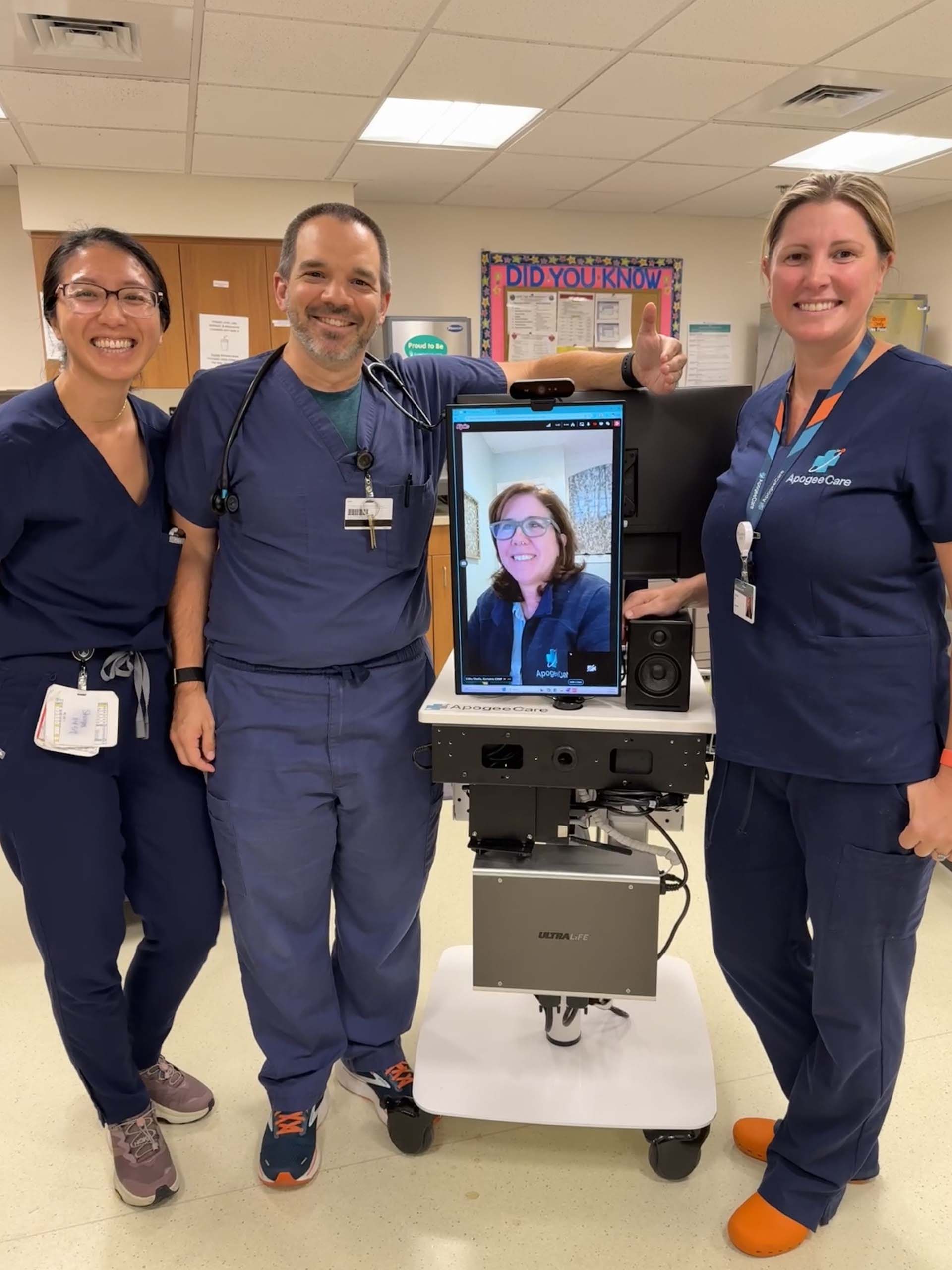



Luminis Health, a Maryland-based health system, is making age-friendly care a priority and strengthening geriatric emergency care to ensure older adults receive the specialty support they need across their care settings.
Luminis Health began building its age-friendly care efforts with the leadership of Lil Banchero, MSN, RN, Program Coordinator of the Institute of Healthy Aging and Lead for System-wide Age-Friendly Care, who works to enhance geriatric care practices, pursue geriatric emergency department accreditation, and identify opportunities to better support older adults in the ED.
"We were looking at how do we elevate the care of our older adults in our ED," Banchero shared. "That included trying to get GEDA accredited and meeting those standards."
Addressing the Challenges
Luminis Health recognized that older adults often face unique challenges during emergency care, including delirium, medication-related complications, avoidable hospitalizations, and functional decline.
"We knew that hospitalization for geriatric patients is extremely morbid, and that a lot of our issues with geriatric patients in the hospital are iatrogenic [unintended harm]," Selinger said. "The geriatric consult could avoid that."
The Partnership
One of Luminis Health's biggest considerations was whether a new program could successfully integrate into one of Maryland's busiest emergency departments (EDs) without disrupting operations.
"We have a very, very high-volume emergency department — about 100,000 visits per year," Selinger said. "There was a lot of caution when we instituted the program in terms of managing that piece."
ApogeeCare brings specialized geriatric expertise into the emergency department through a team of on-site clinicians supported by telehealth-enabled geriatric specialists. Working alongside ED physicians and nurses, the team helps identify high-risk older adults early, align care with patients' goals, support safe transitions, and reduce unnecessary hospitalizations while fitting into existing clinical workflows.
"I've never seen something like this where we instituted a significant change in patient care in the ED, and the ED doctors never had a concern," he said.
ApogeeCare is designed to integrate into a hospital's existing clinical workflows rather than requiring teams to create new ones. By working alongside emergency physicians and nurses, the care model complements the care already being delivered while providing specialized geriatric expertise when it is needed most.
"It is incredibly gratifying to be involved with a program that makes such a difference in patient outcomes and also benefits the hospital from a business perspective. The ApogeeCare program has decreased morbidity for our admitted patients as reflected in a lower length of stay and has allowed us to avoid admissions for some patients, avoiding the risk of hospitalization and favorably impacting the hospital."
The impact extends beyond patient outcomes and hospital operations. By integrating into the existing ED workflow, the program has also helped build support among the clinicians providing care at the bedside.
"The nursing feedback was also immediate," Banchero said. "They loved it right away because they saw the benefit of this, especially with our older population."
Changing the Culture
Banchero explained.
"But the culture has really changed a lot here because of education and knowledge about geriatric patients and you can just feel the difference. We have nurses now that are actually part of the whole geriatric certification work,"
Banchero said. "There's a real buy-in from nurses at the bedside now in the ED."
By using a comprehensive geriatric assessment, which involves an in-depth hour-long interview with the patient and gathering collateral information, ApogeeCare providers often discover unexpected findings that would not emerge in a traditional emergency department examination.
"They make a discovery that you would expect a geriatrician to make, but not necessarily an ED physician," Selinger said. "And that made a difference for our patients."
Supporting Patients, Families, and the Community
The program has also increased awareness of Luminis Health's commitment to older adults throughout the community.
"They developed relationships with our SNFs and our community right from the beginning," Banchero said. "There's now a trust between organizations that hasn't always been there."
That emphasis on connection extends to the patient and family experience. By bringing specialized geriatric expertise into the ED, the program gives older adults and their caregivers an additional layer of support during what can be an overwhelming and uncertain experience.
For Luminis, that experience has also translated into greater recognition of the program within the community. Families are increasingly aware that ApogeeCare is available when an older loved one comes to the hospital.
Selinger described the broader community impact:
"People know now that when they've got a family member or a neighbor who is 80+, and they're not doing well, and they were going to send them here. Families now ask if ApogeeCare is in the hospital. From a patient experience and community perspective, it's a really amazing program."
A Recommendation from Luminis Health
When asked what they would tell another health system considering ApogeeCare, the answer was simple:
"Yes."
"There are multiple benefits," Selinger said. "Not the least of which is improving care for a vulnerable population. We would do it again today."